
Last updated November 22, 2026
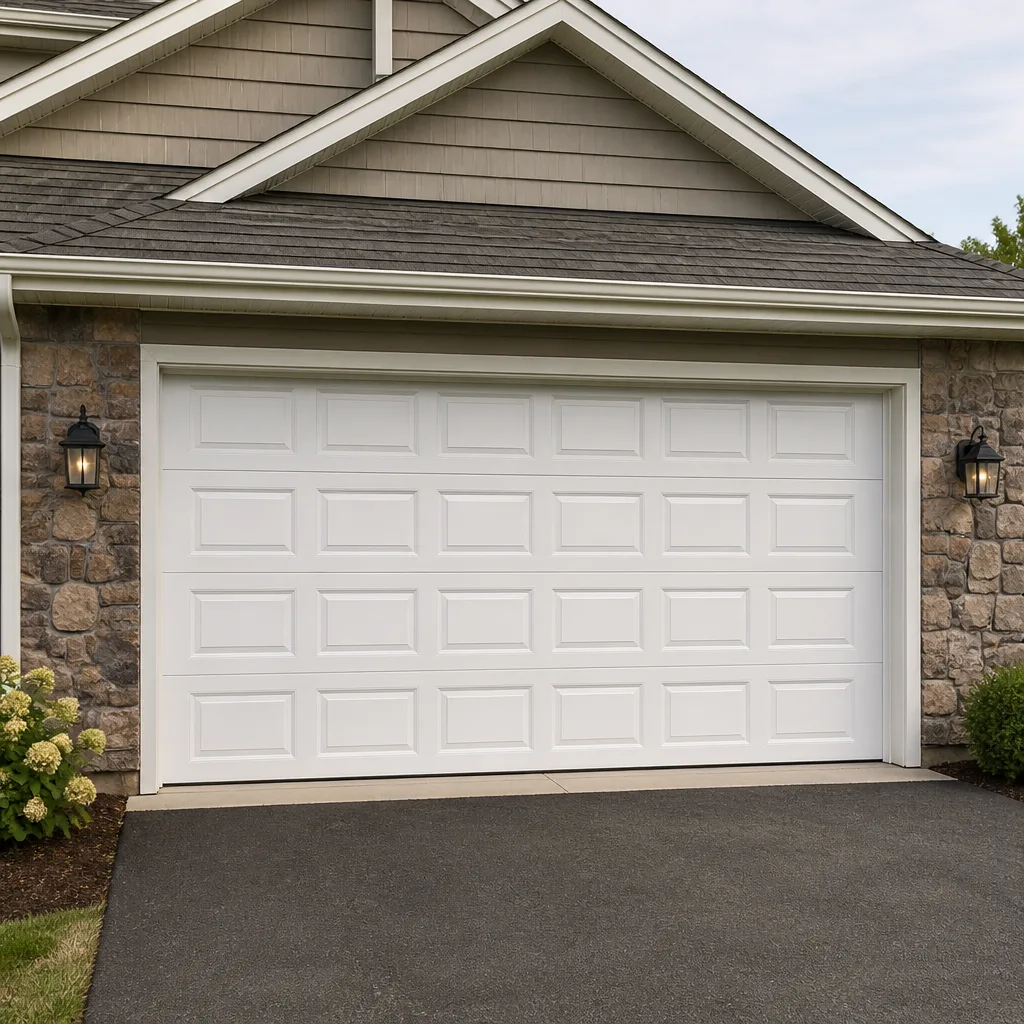 Raised-panel steel
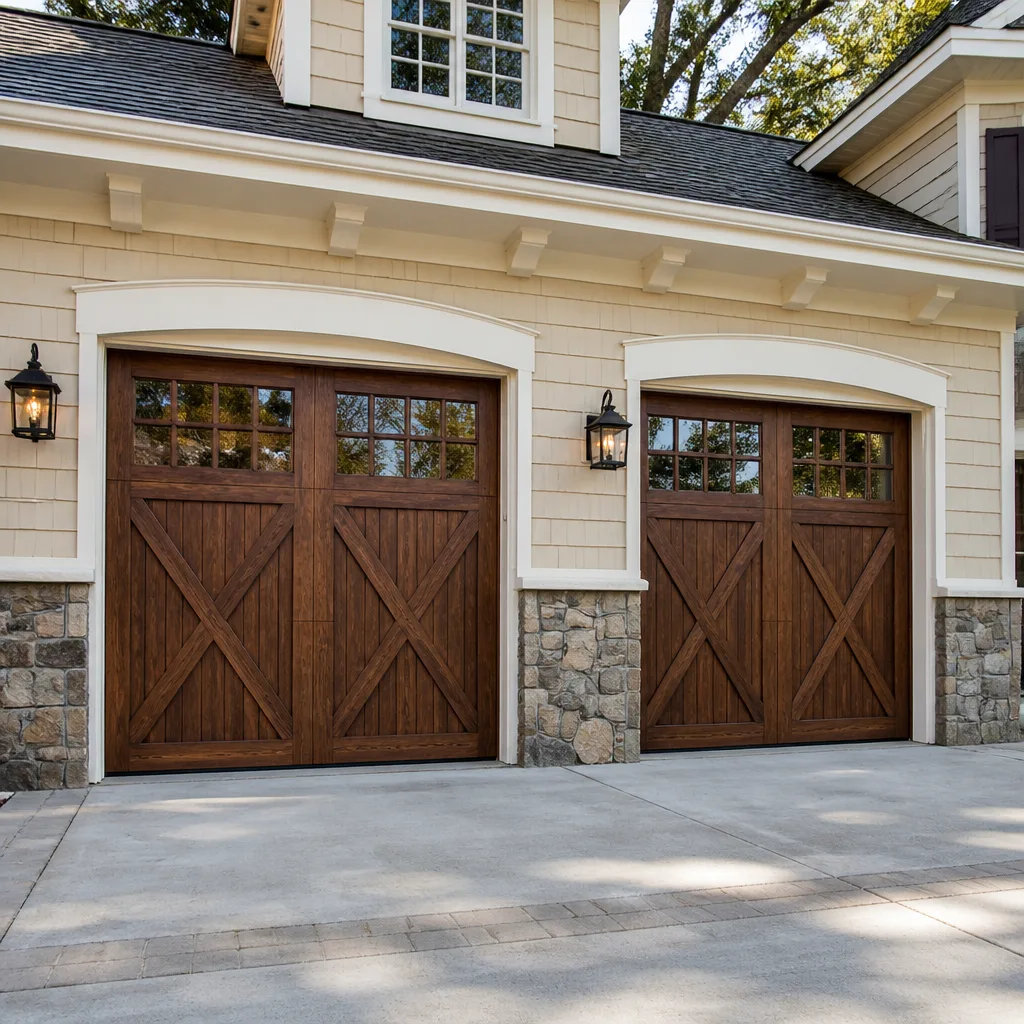 Carriage house
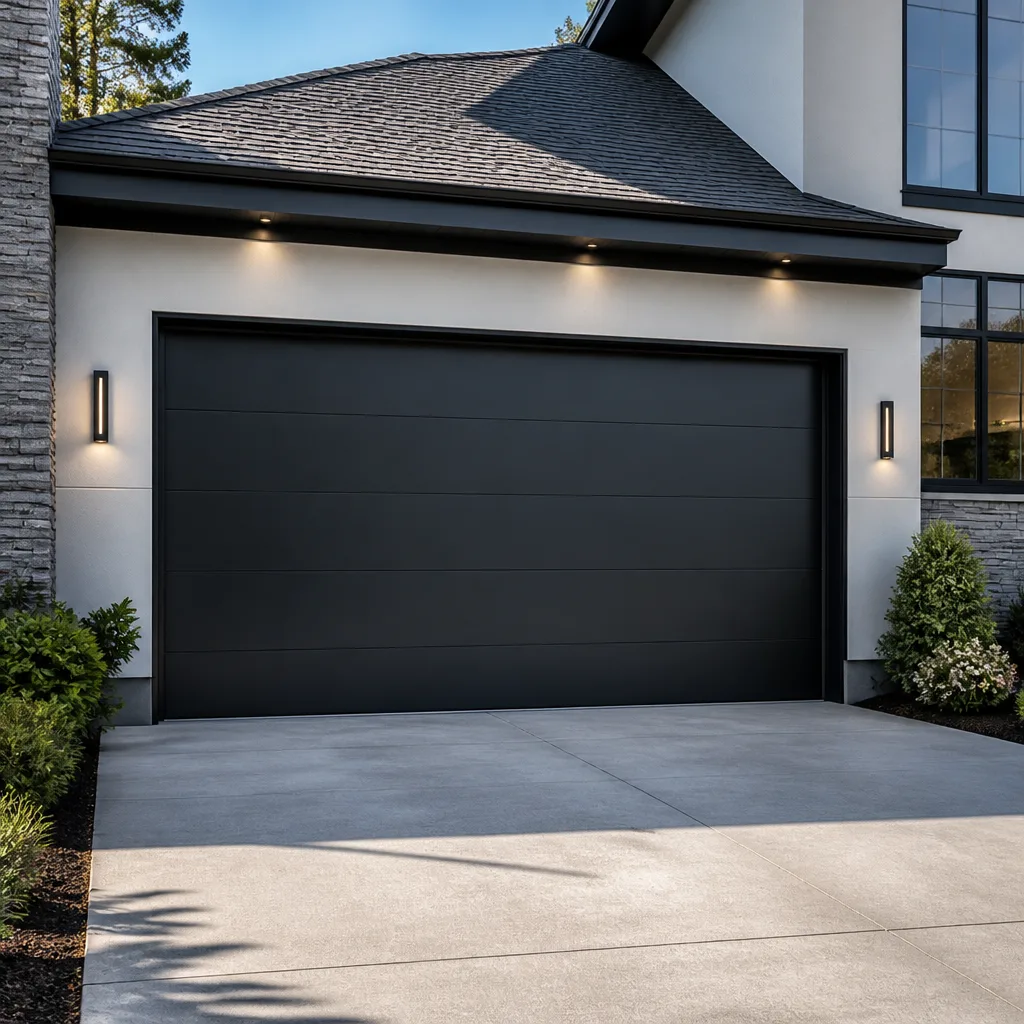 Modern flush
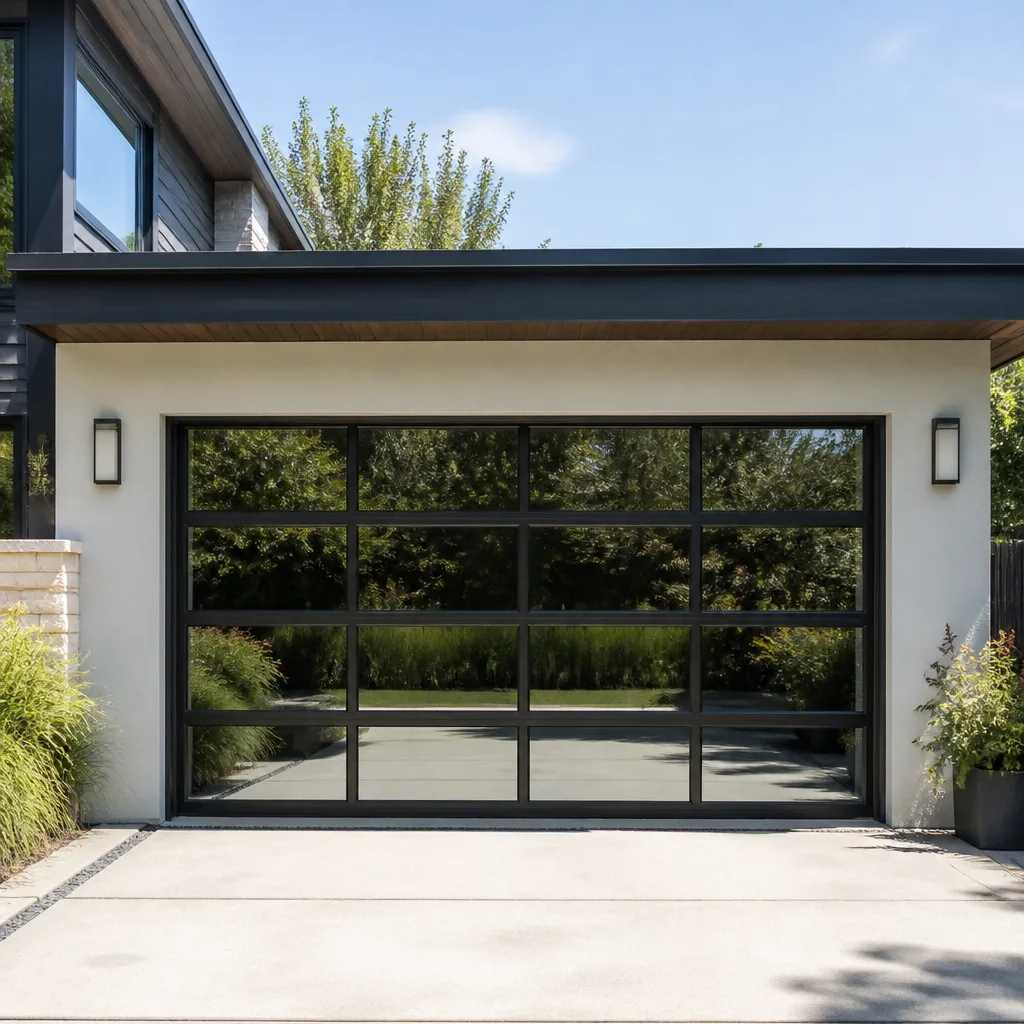 Full-view glass
 LiftMaster openers
 Chamberlain openers
Full 25-point door and opener safety check with every visit - springs, cables, rollers, tracks, and your LiftMaster or Chamberlain opener included
You get a price before we start. It does not change when the pro arrives.
Get your free estimateGarage Door Repair Maintenance Checklist for Brentwood Homeowners
Most homeowner maintenance checklists stop at “lubricate the chain.” A garage door technician’s actual inspection covers far more ground, and the points homeowners skip are usually the ones that lead to expensive emergency calls. Springs, cables, hinges, rollers, tracks, weather seals, and the opener’s safety systems all fail in specific, observable ways, and each one tells you something different about how much life it has left. This guide walks through a real inspection in the order a technician performs it, with pass/fail criteria you can actually apply. We’ll also cover which tasks are safe for you to handle and which carry real injury risk, and how Brentwood’s seasonal swings change what you should check in October versus April.
Quick Answer
A useful garage door maintenance checklist inspects each component for specific failure signs: worn spring coils, frayed cables, cracked rollers, loose hinges, misaligned tracks, hardened weather seals, and a sluggish or reversing opener. Most of the checks are visual and safe to do yourself; spring, cable, and opener adjustments belong to a technician. In Brentwood, the two most important checkpoints are an October pre-winter inspection and an April post-winter inspection, since the Island’s wet cold and summer humidity stress different parts at different times.
Styles & brands we work with
- Raised-panel steel
- Carriage house
- Modern flush
- Full-view glass
- LiftMaster openers
- Chamberlain openers
Table of Contents
- Why a Component-by-Component Checklist Beats a Monthly Reminder
- Springs: What Wear Actually Looks Like
- Cables, Drums, and the Hardware That Fails First
- Tracks, Rollers, and Hinges: Free Checks You Can Do Safely
- Opener, Safety Reversal, and Photo-Eye Checks
- Weather Seals and the Brentwood Seasonal Calendar
- Keeping a Garage Door Log (and Why It Matters at Resale)
- The Three Maintenance Skips That Cause Emergency Calls
Why a Component-by-Component Checklist Beats a Monthly Reminder
Generic advice like “inspect your garage door once a month” fails because it doesn’t tell you what you’re inspecting for. Wear on a torsion spring doesn’t announce itself the way a broken door does. It shows up as stretched coils, a door that balances at a different height than it used to, or a loud crack as you leave in the morning. If you know the specific signs, you can catch a component at 80 percent life instead of 0 percent.
In our experience, the maintenance habits that separate a door that lasts quietly for years from one that fails suddenly come down to observation, not effort. A homeowner who runs a two-minute visual sweep of six components every few months will catch more than a homeowner who spends an afternoon with a can of lubricant and no criteria for what to look at afterward.
Brentwood garages see real seasonal stress that most checklists don’t account for. Summers are humid enough that steel hardware rusts at contact points, and winter cold contracts everything, making existing cracks and fatigue more likely to finish the job. The current version of that checklist needs to reflect that a door in Brentwood operates differently in February than it does in July.
This guide follows the technician’s order: springs and cables (most critical, least safe), then hardware you can safely inspect, then the opener, then seals, then the log. Skip ahead if you want, but the order matters because a spring issue changes what you see everywhere else.
Springs: What Wear Actually Looks Like
Springs are the single most important thing on any garage door inspection, and they’re also the one component you should never touch yourself. A torsion spring stores enormous energy. Modern springs are under so much tension that a break releases stored force with a loud crack that can send pieces of spring across the garage. Every trade professional treats spring work as the most dangerous part of the job, and you should too.
That said, you can safely inspect them from a distance with the door closed.
What a technician checks on springs
- Coil gaps. A worn torsion spring develops visible gaps between coils when the door is closed. A spring with uniform tight coils is healthy; one with uneven or stretched gaps is closer to failing than you might expect.
- Rust streaks. Brown dots along the coils are common in Brentwood, where humid summers and wet winters both push moisture into the garage. Surface rust isn’t urgent, but it’s a warning that the spring is thinning.
- Stretched length. Extension springs (the ones that run along the track, not above the door) stretch over time. Compare both sides: if one is visibly longer than the other, they’re out of balance.
- Door balance. With the door half-open, it should stay roughly where you place it. A door that drifts down, or shoots up, means the springs aren’t holding the load evenly.
- Sound. A single sharp crack from the garage – even if the door still opens – usually means a spring or one of the pair has broken.
If you suspect spring wear, don’t attempt to adjust tension or replace a spring. Those are the calls that a trained technician handles, and garage door spring repair is the specialty where the risk of a homemade fix is highest. A snapped spring can also drop the door or stall the opener, which is why a professional inspection at the first sign of wear is worth more than a wait-and-see approach.
Why spring repair is worth calling about early
Springs don’t fail gracefully. They fail all at once, usually when the door is moving. If you’ve seen the signs above, you may have a window in which a scheduled spring replacement keeps you out of an emergency call. If you’re already hearing a crack or the door won’t lift, that window has closed and the fix is now urgent.
Cables, Drums, and the Hardware That Fails First
Cables work with the springs to lift the door, and they fail in two patterns: fraying strands (gradual) and full snap (sudden). Cables are also under tension, so the inspection is visual only. A technician holds the door steady and looks for fraying at the cable ends, at the drum, and where the cable passes over each pulley. A cable with a stray wire or a birdcage of frayed strands is on its way out.
Pass/fail criteria for cables
- Pass: Cable looks smooth end to end, no frayed wires, even tension on both sides.
- Pass with a note: Barely visible surface rust on the drum, no fraying. Lubrication is often enough.
- Fail: Any visible frayed strand, a cable that has jumped off its drum, or a noticeable slack-side difference.
Hinges, brackets, and bearing plates round out this group. Loose or bent hinges usually announce themselves as a wobble or squeak near the top or bottom corner of the door. A hinge that visibly bends under hand pressure is tired. Bearing plates live above the door and are not something to reach toward; if you see rust or a knocking sound from the center of the door, that’s for a technician.
For anything in this section that reads as “fail,” the fix belongs with garage door repair rather than a hardware store run. Cables and drums are load-bearing. A loose cable isn’t a broken light switch; it’s a component that can whip free and cause injury, and no homeowner should be adjusting cable tension on their own.
Rollers and tracks you can inspect yourself
Rollers are safe to look at. Most doors have ten or twelve, and they should roll smoothly. A cracked, chipped, or square-edged roller needs replacement. Nylon rollers develop flat spots; steel rollers get rough and rattle. Neither is an emergency, but both accelerate wear on the tracks.
Tracks get the blame for problems they didn’t cause, but you can actually check them. Stand back and look at the door halfway open. The vertical tracks should be straight, plumb, and parallel. Dents, kinks, or a gap between the door edge and a track are real signals. A track that’s been bumped with a vehicle or hit by a bicycle usually shows as a visible dent with a rough spot.
Tracks, Rollers, and Hinges: Free Checks You Can Do Safely
These are the components a homeowner can genuinely inspect and, in some cases, maintain. The rule that keeps this safe is simple: check everything with the door closed and the power disconnected, and don’t loosen load-bearing hardware.
Safe DIY checks
- Tracks. Visual inspection only for dents, bends, and spacing. Compare the two sides for symmetry.
- Hinges. Look for loose pivot points and bent metal. A worn hinge often shows a shiny wear pattern against the panel it sits on.
- Rollers. With the door closed, look at each roller where it sits in the track. Chipped or flat-spotted rollers should be noted for replacement.
- Door panels. Check for cracks in the panel skin, especially near the bottom panel where moisture collects. Creaks and rattles are usually loose hinges or worn rollers.
- Lubrication. Use a silicone-based spray on hinges, rollers, and the torsion bar. Avoid WD-40 on moving parts; it attracts dirt. Avoid grease on tracks, which grabs debris.
Three or four times a year is a sensible frequency for a quick visual sweep. In Brentwood, adding a check in October before the cold and again in April after it is the most useful habit you can build. The transition between seasons is when hardware that loosened over winter announces itself.
If a track gets dented in a way that throws the door off-line, don’t try to bend it back with a pry bar. Tracks steer the door and the wrong bend worsens the misalignment. That’s a professional job.
Opener, Safety Reversal, and Photo-Eye Checks
The opener is the component that gets the least respect and the most blame. Most “opener problems” are actually door problems: a binding track, a worn roller, or a spring that’s about to fail strain the opener until it stops. The opener is doing its job; it’s the door that’s fighting back. If your opener brand is one of the eight major systems we service, like LiftMaster, Chamberlain, or Craftsman, a technician can test the unit’s internal settings rather than suggesting a new opener.
The safety reversal test
This is the single most important test a homeowner can run, and it’s free.
- Open the door fully, then close it and watch the door meet the floor. It should reverse on contact with a firm object; place a roll of paper towels or a 2×4 flat on the floor as a test target.
- Test the photo-eye system: with the door open, wave a broomstick through the eye beam. The door should not close. If it doesn’t stop, the safety system is failing.
- Note the result. A door that fails either test needs service before you use it again.
Both tests are quick and safe. A failing photo-eye is often a dirty lens (clean it with a soft cloth) or a misaligned sensor (loosened bracket). If cleaning and straightening don’t fix it, the wiring or the unit itself needs a professional.
Opener checks worth noting
- Chain or belt tension. A sagging chain shouldn’t be tightened more than hand-tight without consulting a technician.
- Force setting. If the door needs to be pushed to start, the force setting may be too low, but the underlying cause is usually a door component.
- Remote and wall station. Replace remote batteries yourself; test the wall station separately to rule out a wiring issue.
- Brand notes. Raynor and Chamberlain units occasionally need contact or gear replacement, and Craftsman openers share components with their Chamberlain cousins. Brand-specific work is exactly what garage door opener repair is for.
If the opener has failed and the door won’t open at all, it’s a security and access problem, not a convenience one. That’s the kind of call that shouldn’t wait until morning. We work on the brand you already have, and if the unit has reached the end of its life, we install new doors as well as repair existing systems.
Weather Seals and the Brentwood Seasonal Calendar
Weather seals are the quietest component on the door and the one most tied to your utility bill and your garage’s humidity. The bottom seal should touch the floor evenly across its full width. If you can see light under the door, or the seal has hardened and cracked, it’s not sealing. Look for gaps at the corners and along the sides, and check the seal around the opener’s rails too.
In Brentwood, the seal schedule has two distinct halves. Between October and March, the cold contracts the door and the seal. A seal that fit snugly in September may show daylight in January. Between April and September, humidity swells the wood framing and the seal can compress against it, which is a good moment to lubricate the hinges. The result: the seal is worth checking in both transitions.
Brentwood’s maintenance calendar at a glance
- October: Pre-winter sweep. Check spring coil gaps, door balance, bottom seal fit, and hinge tightness. Replace any hesitant roller before cold weather.
- April: Post-winter sweep. Re-check balance and seals, look for rust on springs and cables, and listen for new sounds after winter.
- July: Humidity check. Lubricate hinges and rollers, look for swelling at the bottom seal, and test the opener and safety reversal again.
The bottom seal is a DIY-friendly replacement. Most panels are sold in standard widths and slide into a retainer, and a half-hour of patience gets it done. The threshold seal that sits on the garage floor can be replaced yourself too, as long as you read the product instructions and clear the floor first.
Weather sealing is also where the local building code question comes in. Some towns have rules about how far a seal can extend below the door line, and how a threshold interacts with the driveway grade. We don’t cite code here; ask your city’s building department if you’re unsure, and always keep the seal materials informed by what the space actually needs.
Keeping a Garage Door Log (and Why It Matters at Resale)
A simple log of what was done, when, and by whom is a surprising amount of leverage when you sell a house or when the door starts acting strange. Buyers ask about maintenance records, and a log answers the question quickly. A recurring issue also reveals itself in a log: if a spring, cable, or opener problem keeps returning, the pattern tells you what to fix instead of just what was patched.
What to log
- Date of each inspection, even the ones you did yourself.
- Components checked and their status: pass, watch, or fail.
- Repairs. What was replaced, which part number if visible, and which brand of system the repair was done on (LiftMaster, Chamberlain, Genie, and so on).
- Spring and cable notes. Mark which ones have been replaced so a future technician knows what’s new and what’s not.
- Opener notes. Model, approximate age, and any settings changed.
- Seal replacements. Date and material type, since some seals harden faster than others.
One index card in the garage, a note on your phone, or a spreadsheet works fine. The point isn’t format; it’s having a record. When a Brentwood homeowner lists a home, a maintenance log often stands in for a home inspection report on the garage door. It’s also a fair way to know what to expect when the door has aged.
The Three Maintenance Skips That Cause Emergency Calls
We field a lot of calls, and the same three skipped maintenance items account for a big share of them. None of these is exotic.
1. Ignoring spring wear
The most common pattern is a spring that showed visible coil gaps for months before it broke. A spring that’s been making a small noise or has visible gaps usually has months of remaining life, not years. If a spring breaks, the door won’t open on the opener and may not lift by hand. The emergency call is typically made the moment the car is stuck inside the garage.
2. Skipping the safety reversal test
A garage door is one of the largest moving objects in the home. A photo-eye that’s been knocked out of alignment or covered in dust fails silently, which means the next time a child or pet walks under the door, the safety system doesn’t do its job. This is the test that takes sixty seconds and gets skipped most often. If you’re due for a check, get a professional eyes on the reversal system; the stakes are high enough to make the visit worth it.
3. Treating opener symptoms as the whole problem
A door that reverses, hesitates, or makes the opener strain is often telling you about binding in the tracks or a failing roller, not a failing opener. Replacing the opener while the door still binds pushes the problem onto the new unit. This is where fresh eyes save money. That’s why we diagnose the door before we quote the repair, and why we offer a free estimate before anything is replaced.
For Brentwood homeowners whose door has stopped altogether, this is where Brentwood Garage Door Repair Co comes in. We answer 24/7, and we can help with fast dispatch from 7am to 7pm, Sunday through Friday. Same-day service is available, and the written estimate is always agreed before any work starts.
Common Mistakes to Avoid
- Lubricating tracks and hinges with the wrong product. WD-40 attracts dirt and grease traps debris; use a silicone-based spray on hinges and rollers instead. A sticky track will make the door sound broken even when the components are fine.
- Adjusting torsion springs or cables yourself. These are under extreme tension and can cause serious injury if you don’t know exactly what you’re doing. Even an experienced handyman should not be touching these on a fully loaded door.
- Ignoring a slight wobble or new rattle. In our experience, a new sound is the first sign of shift: a loosening hinge, a worn roller, or a freshly bent track. Catching it with a quick look saves a bigger repair.
- Skipping the October and April checks. Brentwood’s seasonal swing is tough on hardware. A door that just passed a summer inspection may need attention after the first cold snap, so treat both season transitions as checkpoints.
- Replacing the opener because the door reverses. Reversal is often a safety sensor or a binding track, not an opener failure. Test before you replace.
- Bending a damaged track back into place. Tracks steer the door, and a homemade bend usually causes roller binding and premature wear on the door edge.
- Ignoring the bottom seal. A seal that doesn’t touch the floor lets in pests, rain, and humidity. Replacing it yourself is straightforward, but leaving it damaged lets moisture reach the hinges and bottom rail.
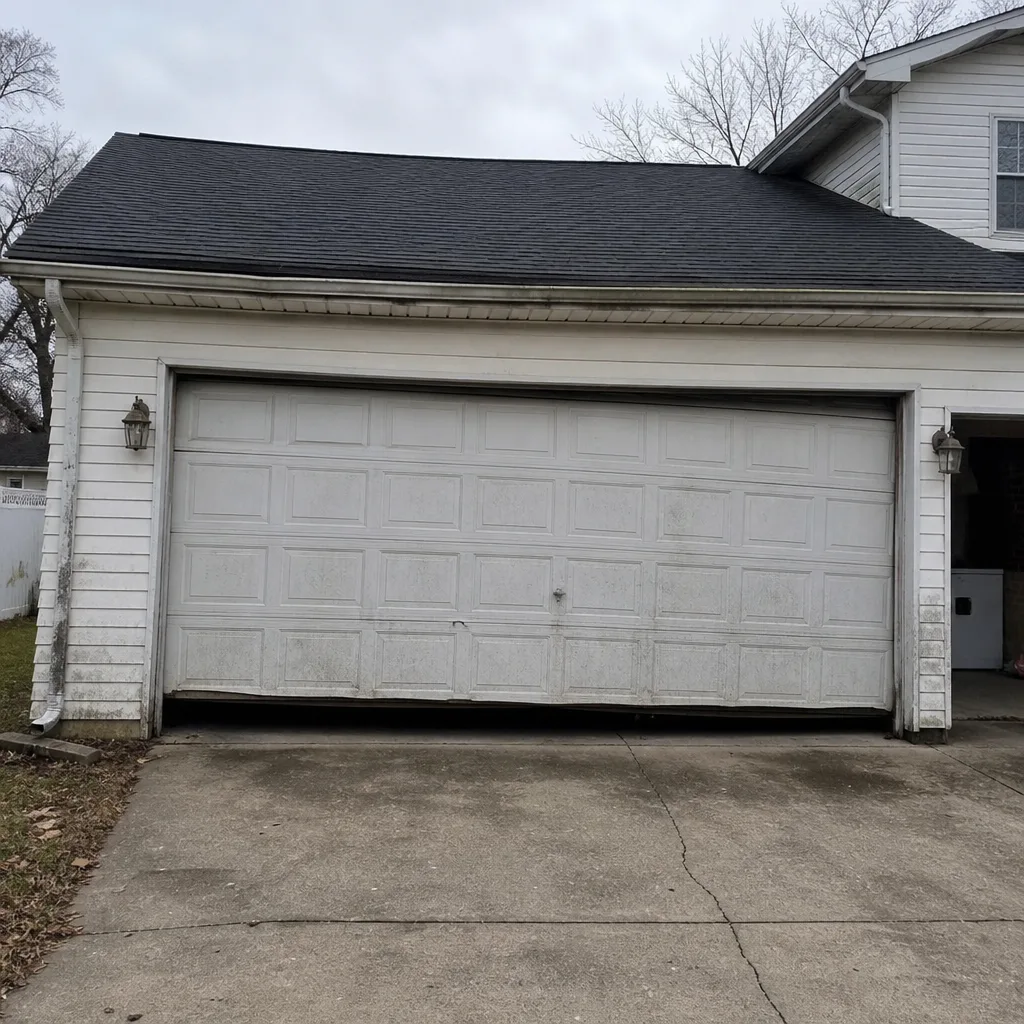
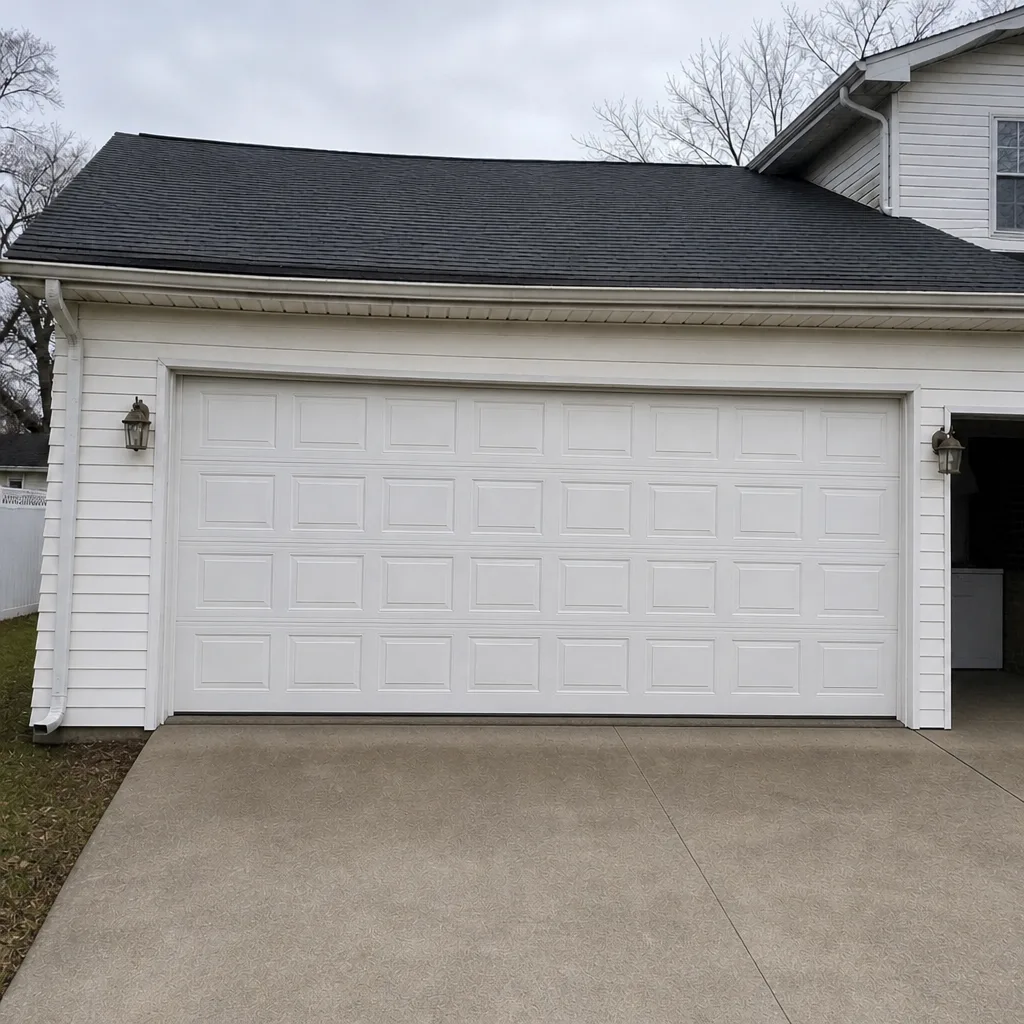
See the difference
 Before
 After
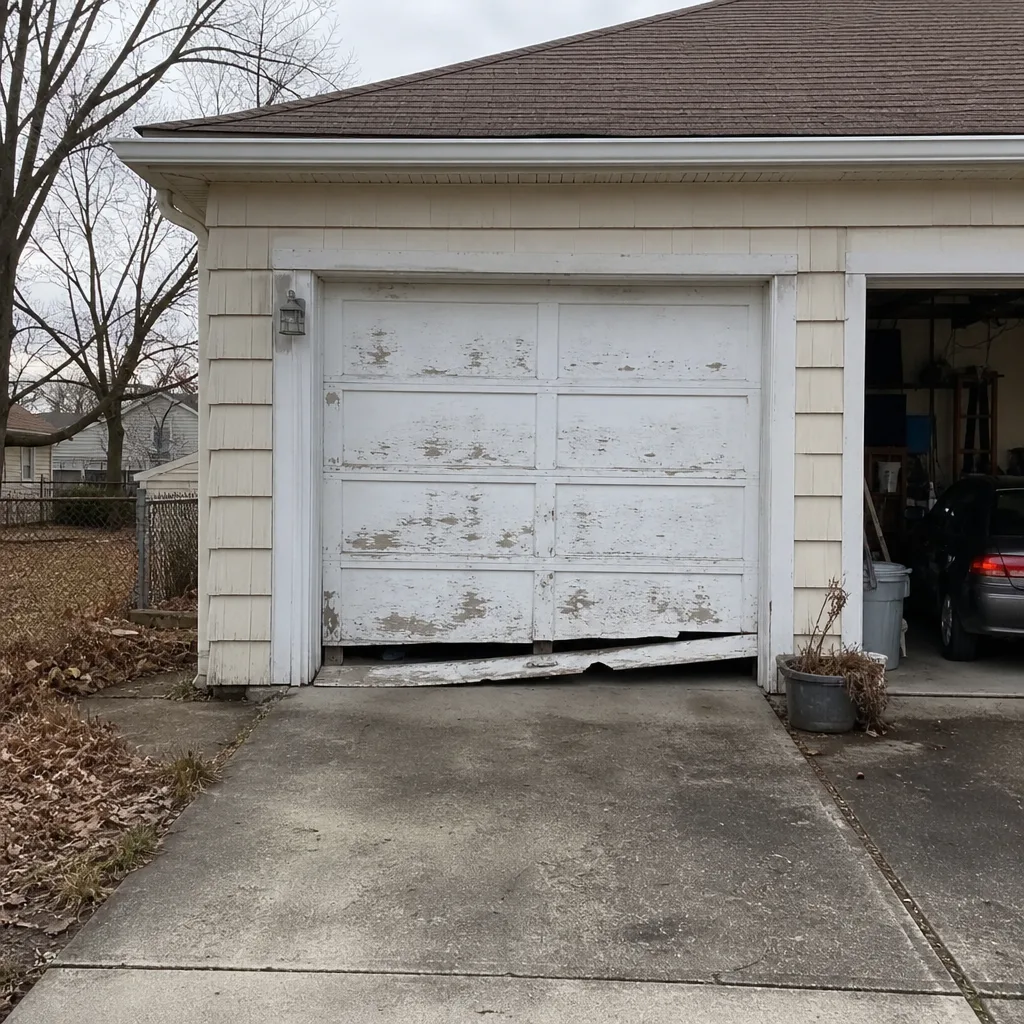 Before
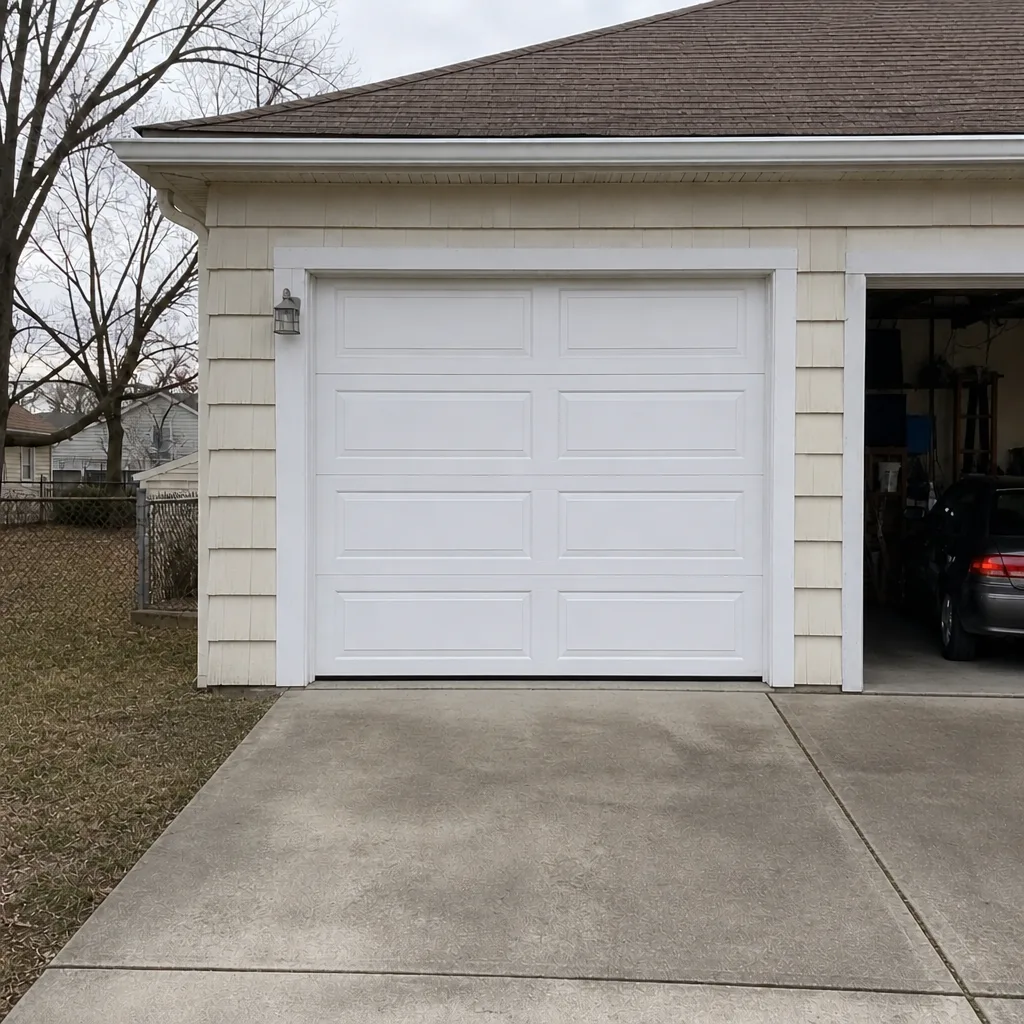 After
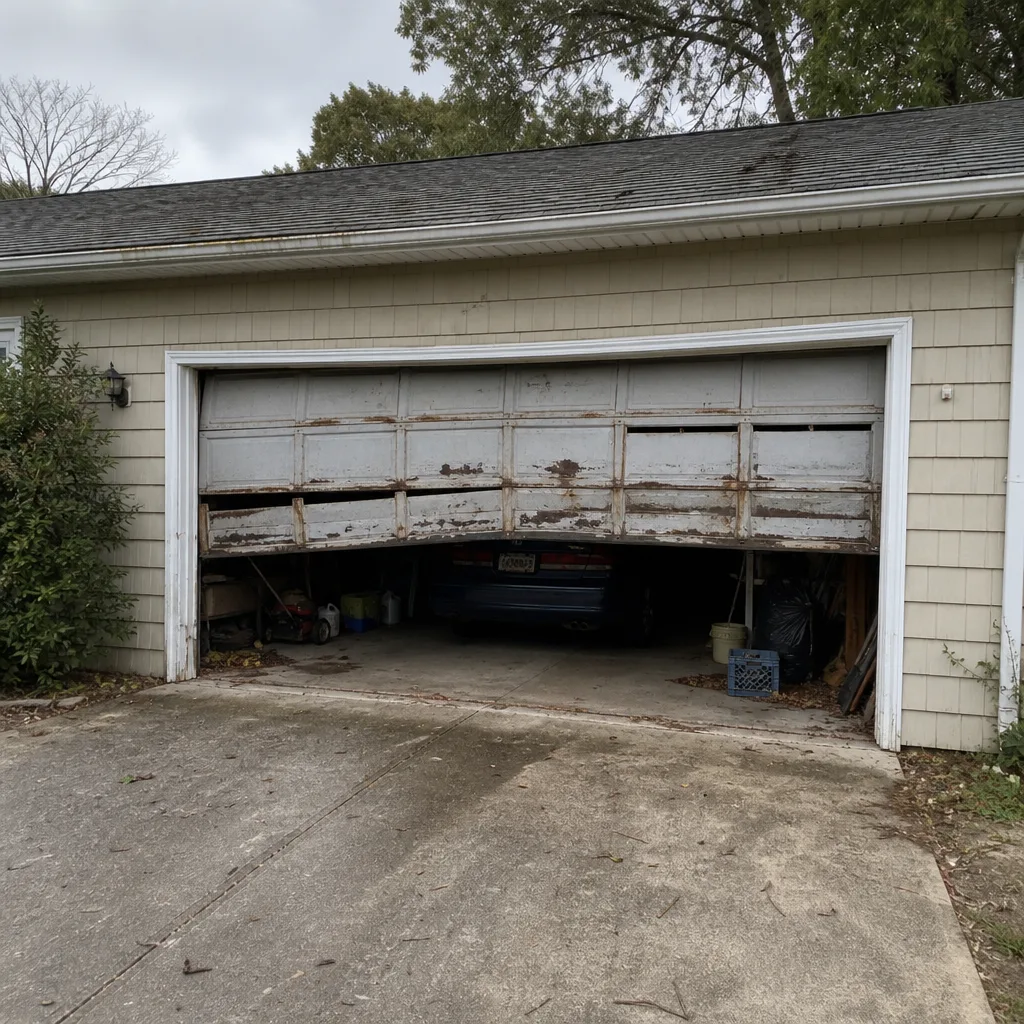 Before
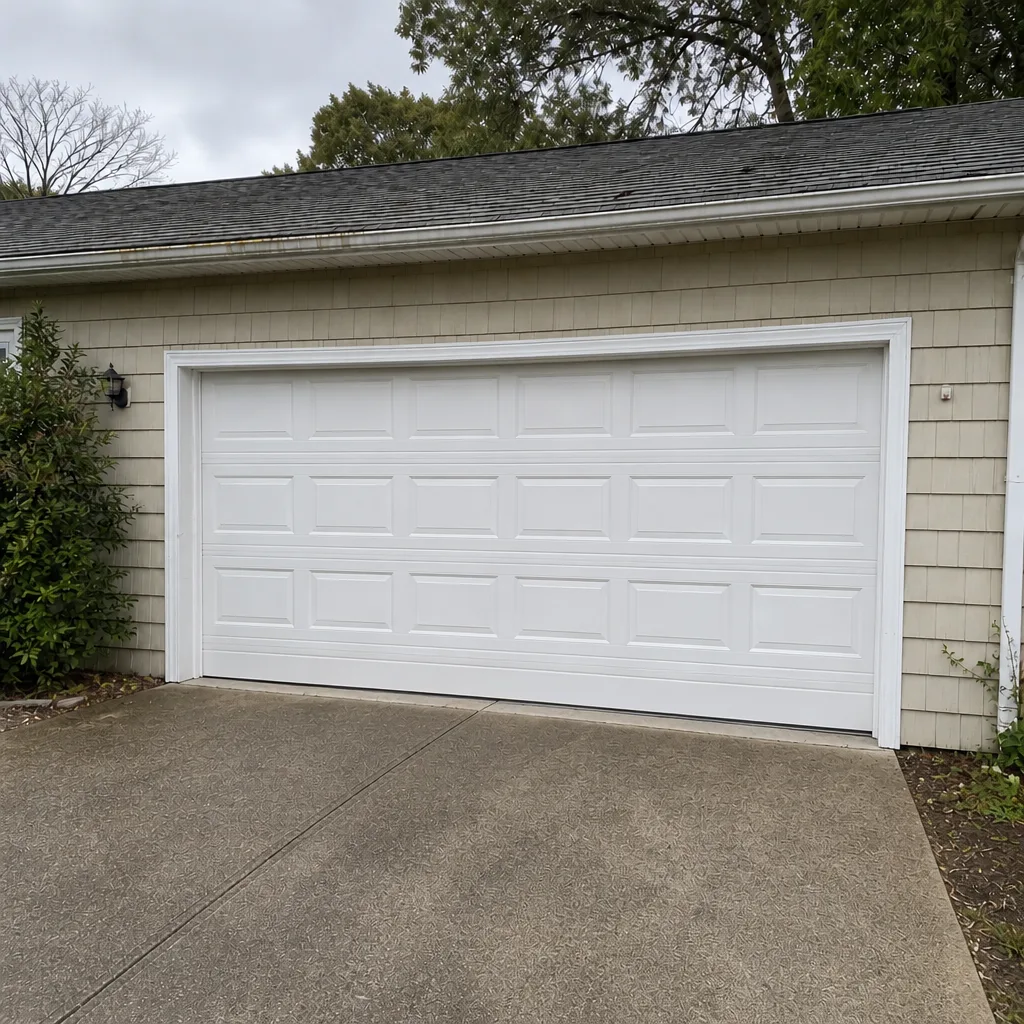 After
When to Call a Professional
Call a professional when the door won’t lift, when you hear a crack from the spring area, when cables look frayed or uneven, when the safety reversal test fails, or when the opener strains to move the door. Also call when the door is stuck open, since that leaves the garage unsecured. Spring and cable work is hazardous and not a DIY job. Opener repairs on LiftMaster, Chamberlain, Genie, Craftsman, and other major brands are routine for a trained technician.
Brentwood Garage Door Repair Co offers free estimates in Brentwood. Call (855) 337-1178. We answer 24/7. Fast dispatch from 7am to 7pm, Sunday through Friday. Our technicians have up to 11 years of experience, and we service all major brands. If it’s a door that’s reached the end of its life, we install new doors too, so you’re not stuck deciding between a repair and a new system without help. One call, every system: garage door opener repair, spring work, or a full replacement.
Frequently Asked Questions
Plan on a visual sweep three to four times a year, with two anchor points: October before the cold and April after it. The July check catches humidity effects. Between those, listen for new sounds and watch for visible wear on springs and seals. If anything fails, call (855) 337-1178 and we’ll give a free estimate.
No. Torsion and extension springs are under tension and should only be handled by a trained technician, and a failure can cause serious injury. You can safely inspect springs from a distance, but replacement and tension adjustment belong to a professional. Our technicians handle spring repair in-house. Call (855) 337-1178 for a free estimate.
A failing opener usually shows as hesitation, a door that reverses mid-travel, a strained motor sound, or a remote that stops responding after years of use. In many cases, the opener is reacting to a binding track or a failing roller rather than failing itself. We can test the unit and the door together; call (855) 337-1178.
A door that bounces on closing or reverses on light contact usually has a force or travel-limit setting that’s out of adjustment, or a worn bottom seal that makes the door contact unevenly. It also fails the safety reversal test in some cases, so check that first. If it persists, call (855) 337-1178 for a free estimate.
We service all eight major brands, including LiftMaster, Chamberlain, Genie, Clopay, Amarr, Wayne Dalton, Craftsman, and Raynor. Whether it’s an opener, a spring, or a full door, we work on the brand you already have. Call (855) 337-1178 to book a free estimate.
No. The price is set per job by the written estimate, and the estimate is agreed before any work starts. That’s what you’ll pay, with no surprise numbers on the invoice. Call (855) 337-1178 for a free estimate.
We answer 24/7, so call whenever the door fails. A call outside dispatch hours is booked into the next opening, Sunday through Friday, 7am to 7pm. We’ll help you get the door secured or the car out, then schedule the repair. Call (855) 337-1178.
The Bottom Line
A garage door maintenance checklist is only useful if it tells you what failure looks like. Springs show their age in visible coil gaps and rust spots; cables fray before they snap; seals let light in; and the safety reversal test takes a minute and can fail silently. In Brentwood, add two seasonal checkpoints, October and April, because the climate pushes different parts at different times. Skip spring adjustment and cable work; those belong to a technician. Keep a log so your history stays legible. And when something fails, call (855) 337-1178. We offer free estimates and service every major brand.
Written by the team at Brentwood Garage Door Repair Co.